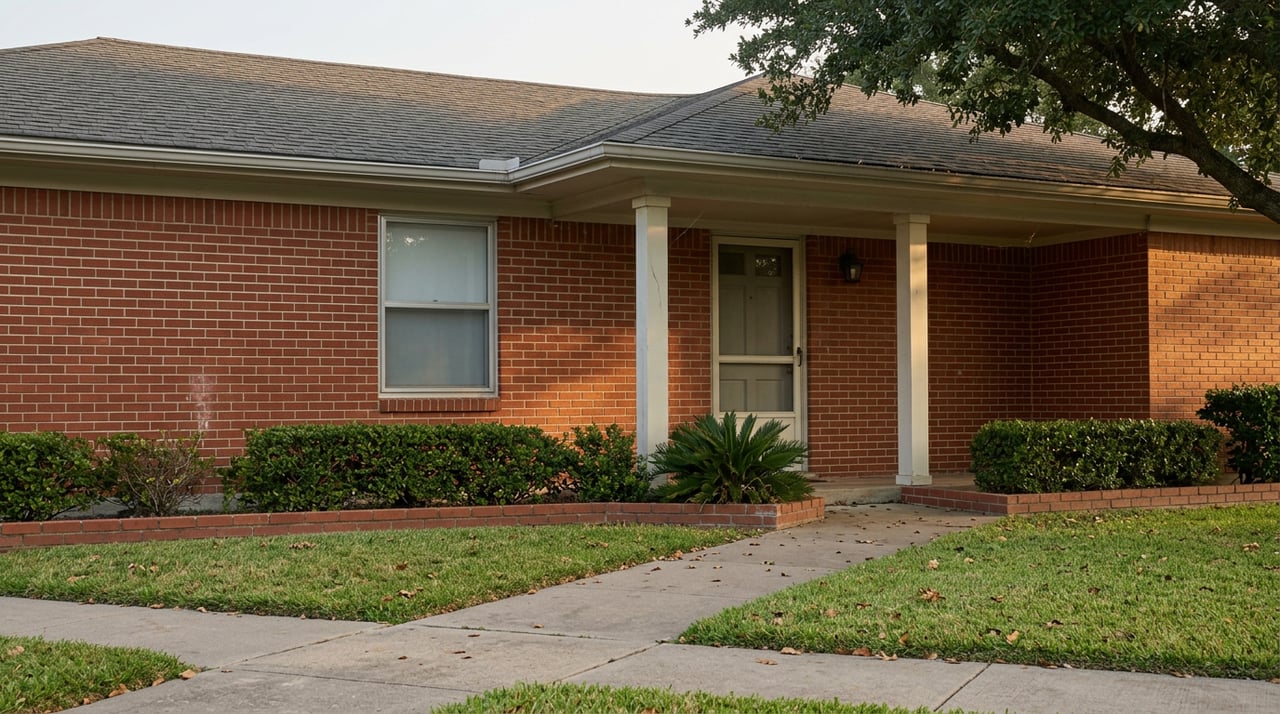
Drive north on Main Street and you will pass 7316, a squat brick building that has fed Northside families since 1956, longer than almost any other restaurant in Jacksonville has stayed in one place. Most people who live nearby have eaten there a dozen times without knowing it holds that record. That gap between what's actually here and what residents notice day to day is the whole reason a grassroots group called Northside Pride spent the last year building something the neighborhood never had before: a printed map of its own history, shaped like a bingo card.
The card has fifteen stops on it. A handful of them are inside a five-minute drive of streets people have lived on for years without ever pulling over.
Who Built the Map and Why
Northside Pride is a 501c3 run by Dana Michelle Maule, a Northside native raised near Dunn Avenue in Biscayne Estates who now owns a home in the neighborhood herself. She started the organization after noticing that Visit Jacksonville's own visitor guides routinely left out Northside businesses and landmarks, a pattern she saw as one more version of the disinvestment the area has dealt with for decades. Rather than lobby for inclusion, she built the case herself: a bingo card and companion map covering fifteen historic and cultural sites, designed with experiential graphic designer Hahau Yisrael. The card is now circulated by Visit Jacksonville, the same office that used to skip past these blocks entirely.
That reversal matters more than it sounds. In 2025, Jacksonville drew 8.2 million visitors who spent $4.1 billion across the city, according to the Jacksonville Daily Record. Maule's argument was never that the Northside deserved a slice of that spending out of fairness. It was that the spending was already skipping real landmarks, and someone needed to put them on paper.
What's Actually on the Card
A few of the stops explain why this document needed to exist in the first place.
- JP Small Stadium, where Hank Aaron broke the color line in the minor leagues years before he broke records in the majors.
- Mount Ararat Baptist Church, now recognized as the first landmark on the local Civil Rights Trail. Little Richard, the man widely credited as the father of rock and roll, sang there.
- Emmett Reed Park, a working neighborhood park that also anchors Northside Pride's own walking tours.
- Mount Herman Cemetery, where Civil War-era troops are buried.
- Edward Waters University, the oldest HBCU in Florida, bordering the Durkeeville area the tours run through.
Maule sums up the stakes in one line she's repeated in local interviews: "JP Small Stadium is where Hank Aaron broke the color lines in the minor leagues." It's the kind of fact that changes how you see a ballfield you've walked past for years without a second look.
The Tours That Already Happened This Year
The map isn't the only thing Northside Pride built. In February, riders gathered at Emmett Reed Gymnasium for a bike tour that cruised through Historic Durkeeville and onto the Emerald Trail S-Line, the multi-use path connecting several Northside neighborhoods. Separate from the bike series, Maule also runs Black Jax Urban Tours, walking hikes through the same Durkeeville streets that put stories behind brick homes most visitors would otherwise just drive past.
In its first year of operation, Northside Pride tallied more than 230 visitors on walking tours through Historic Durkeeville centered at Emmett Reed Park, a number that reflects local turnout more than tourist traffic. That's the audience these tours were built for from the start: people who already live here and never had a reason to stop and look closely at their own streets.
The tours also caught attention outside Jacksonville. In February, Black travel influencer Eileen Ivette spent three days documenting the Northside for a national audience, with stops that give a real sense of the range on offer: an eco-tour at the Therapeutic Nursery and Gardens, an urban food forest tucked into the neighborhood; Chef Love's food truck at Trout River Food Park; and RnB Mostly, an after-dark music event in the Phoenix Arts District.
Where to Actually Spend an Afternoon
If you're looking for a version of the loop that fits an ordinary Saturday, the pieces are already there. Start at Emmett Reed Park, walk or bike a stretch of the Emerald Trail S-Line, and swing past Myrtle Avenue, where Maule herself walks and bikes and where Northside Pride installed a mural at Families of Slain Children Inc. as part of its first year of work. If you're hungry, Trout River Food Park is worth checking for Chef Love's truck, and the Therapeutic Nursery and Gardens is close enough to fold into the same afternoon if you want the urban food forest angle rather than just the history stops.
End the day at Joseph's Pizza on North Main Street. It's easy to treat a 1956 restaurant as background noise when you've lived nearby your whole life, but it's also the same room where Northside Pride chose to hold its own first-anniversary celebration this year, honoring the donors, media partners, and volunteers who helped the organization get this far. Recognized names on that list include LISC Jacksonville, St. Johns Riverkeeper, and local journalists Lynn Jones, Amanda DeVoe, and Jasmine Monroe. That a scrappy neighborhood nonprofit chose the oldest pizzeria in the city as its own milestone location says something about how deliberately this group is building its own sense of place.
Why This Is Worth Knowing Now
None of this is aimed at outsiders discovering the Northside for the first time. It's aimed at the people already living there, the ones who've driven past JP Small Stadium a hundred times without knowing what happened on that field, or who've never made the connection between Mount Ararat Baptist Church and a Civil Rights Trail marker sitting a few blocks from home. Maule has said her real project is amplifying stories that were already here, not inventing new ones. The bingo card is just the delivery method.
If you've lived on the Northside for years and none of these fifteen stops sound familiar, that's less a gap in your knowledge than a gap the map itself was built to close. Pick a Saturday, start at Emmett Reed Park, and see how many squares you can fill before dinner at Joseph's.
Terri Drummond and the team at Plenti Realty spend as much time learning the streets we work in as we do the transactions on them. If you're curious what a home on one of these blocks is actually worth in today's market, reach out any time for a free home valuation.