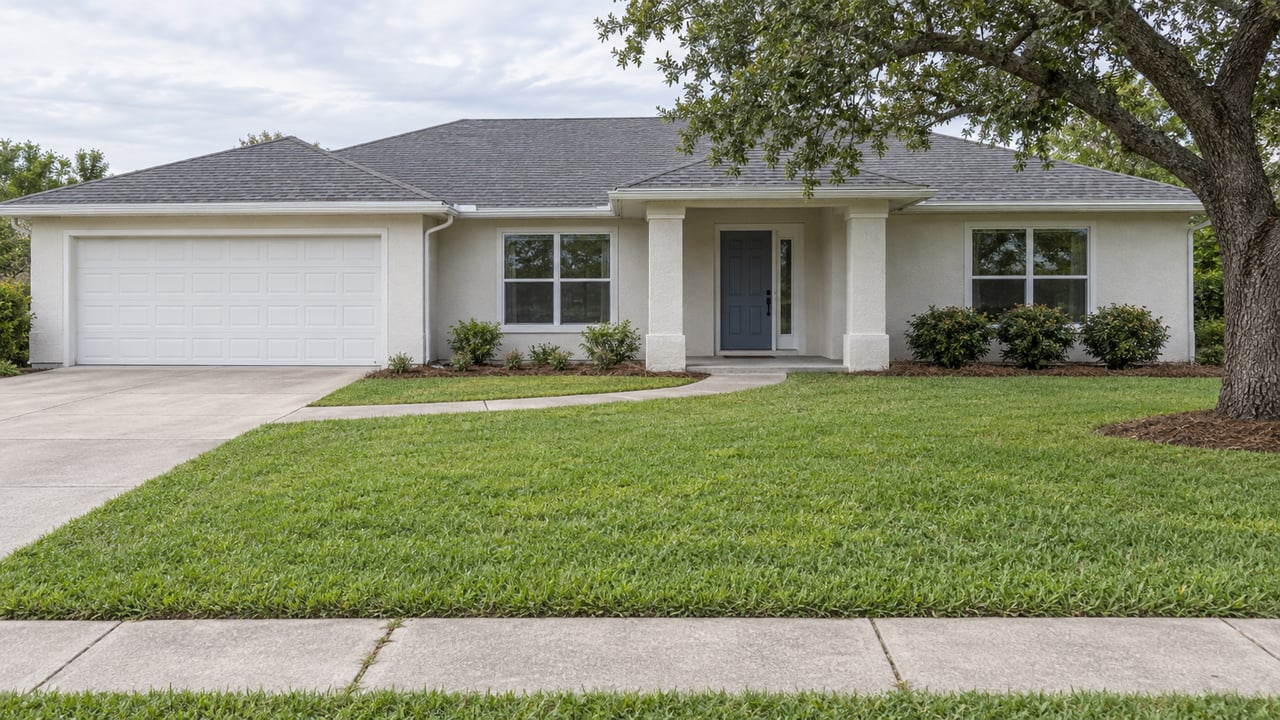
Two homes a mile apart in Northwest Jacksonville can carry the same square footage, the same 1960s block construction, and completely different financing outcomes. One sits on a street where JEA finished sewer work two years ago. The other is still on a septic tank, waiting on a project that has not yet broken ground. An appraiser treats those two houses differently. A VA or FHA underwriter treats them differently too. And most buyers touring both homes on the same Saturday would never guess why.
That gap is not about school zones or curb appeal. It comes from where a specific pocket of the Northside sits inside JEA's long-running Septic Tank Phase Out Program, a multi-decade effort to convert aging septic systems in four priority neighborhoods to municipal sewer. Understanding which stage a neighborhood is in matters more to a buyer's closing timeline than the list price does.
Same Region, Four Different Timelines
The program, approved by Jacksonville City Council in 2016, targets neighborhoods where old septic systems sit close enough to the St. Johns River and its tributaries to leak bacteria and nutrients into the water. The first four priority areas are Biltmore C, Beverly Hills, Christobel, and Riverview, all in Northwest Jacksonville on the Northside. For a project to move forward, JEA says the city requires at least 70 percent of property owners in that neighborhood to sign on.
That 70 percent threshold is the hinge the whole story turns on. Some neighborhoods cleared it years ago and finished construction. Others are still gathering signatures. The practical result is that "Northside home on septic" is not one category. It is four categories, each with its own calendar.
| Neighborhood | Septic Systems Involved | Status as of 2026 |
|---|---|---|
| Biltmore C | 351 | Construction completed 2022 |
| Beverly Hills (East and West) | 755 | West completed 2023, East completed 2024 |
| Christobel | 509 | Construction underway since March 2026, expected to run through late 2028 |
| Riverview | Roughly 2,400 parcels | Still in design and outreach, the largest of the four projects |
A buyer looking at Biltmore or Beverly Hills today is looking at homes already connected to city sewer. A buyer looking at Christobel is looking at a neighborhood mid-construction, with crews digging trenches up to 18 feet deep to install manholes and extend lines. A buyer looking at Riverview is looking at a neighborhood where the timeline has not been set yet, because the city is still confirming enough owner participation to fund the design phase.
Why Your Lender Cares About a Tank You Will Never See
Government-backed loans do not treat septic systems as a footnote. According to Septic and Well, FHA and VA financing typically requires evidence that a septic system is functioning properly before the loan can close.
This is where the phase-out program becomes more than an infrastructure story and turns into a closing-timeline story. A home in a neighborhood with an active or completed sewer conversion has one less system for an appraiser to worry about. A home still running on an aging tank, in a neighborhood where conversion has not started, carries that inspection risk through every financing path that requires it.
The Charge That Shows Up After the Threshold Is Met
Connecting to the new sewer line does not cost the homeowner anything upfront. JEA's program covers the sewer pipe installation, the abandonment of the old septic tank, and the permits and fees tied to the connection. Once hooked up, the property owner simply becomes a JEA water and sewer customer and pays the standard monthly utility bill going forward.
The friction shows up for owners who decline to connect after their neighborhood clears the 70 percent threshold. JEA's Riverview project documentation spells out the consequence directly: property owners who do not sign up once the threshold is reached become responsible for their own future connection costs if the septic system ever fails, and in the meantime face a $21.15 monthly sewer system availability charge whether they use the sewer service or not.
For a buyer evaluating a home in a neighborhood approaching that threshold, this is worth asking about directly. A seller who opted out of an already-approved project has effectively locked in a future bill, and possibly a future repair cost, that a new owner will inherit.
What Florida's Disclosure Rules Actually Require, and What They Do Not
According to Florida Realtors, Florida operates on a caveat emptor standard for real estate. Disclosure rules still matter. Septic versus sewer status falls into a gray area that has actually generated real disputes. A Florida Realtors case study on this exact issue describes a scenario where a listing broker was cleared of an ethics violation after failing to mention a home was on septic, in a neighborhood where every other house was connected to sewer, because the broker had no way of knowing that fact from a visual inspection and had been told by the seller that the home was on sewer.
That case is a useful reminder for anyone touring homes in a phase-out neighborhood. The status of a specific parcel, connected, in design, or still on an unconverted septic tank, is not always something a walkthrough reveals. It is a detail worth confirming through utility records rather than assuming from the neighborhood's general reputation.
The Timing Window That Matters More Than the List Price
Mayor Donna Deegan spoke to this directly while construction was underway on the Christobel project, funded through a combination of $10 million from the city's capital improvement plan, $6.75 million from a congressionally approved EPA grant, and JEA's own contribution, for a total project cost of $34 million.
"It brings more residents, it brings economic activity, it also brings growth. That means rising property values, more community pride and overall just a stronger neighborhood."
— Mayor Donna Deegan, quoted by the Jacksonville Daily Record
That statement points at the actual opportunity here. A home purchased in Christobel today, while construction is underway, is a different asset than the same home will be once hookups are complete sometime after late 2028. The renovation work happening in the street right now, the trenching, the manhole installation, is temporary. What it leaves behind is permanent utility infrastructure that removes one of the biggest financing and resale friction points a Northside home can carry.
Riverview sits one step earlier in that same arc. The neighborhood is still working through design and outreach, with roughly 2,400 parcels expected to eventually connect, making it the largest of the four projects once it moves forward. Buying there today means buying ahead of a multi-year public works timeline, not after it.
What Buyers Usually Ask
Does being on a septic tank automatically hurt a home's value on the Northside? Not automatically. Plenty of septic systems function well for years. The friction shows up specifically around financing requirements for FHA and VA loans, and around future costs if a neighborhood clears the 70 percent participation threshold and a specific owner opts out.
If I buy in Riverview before construction starts, what am I actually buying into? You are buying a home in a neighborhood the city has already designated a top priority project, but one where design work and construction dates have not been finalized. The eventual connection would be free to the property owner under the current program terms, but the timeline depends on when Riverview finishes its design phase and construction is scheduled.
Is the sewer hookup really free? For property owners who participate once a neighborhood project moves forward, yes. JEA covers the pipe installation, tank abandonment, and connection fees. The only new cost is the monthly water and sewer utility bill that begins once the home is connected, which replaces the maintenance costs of a septic system.
The Northside's housing stock spans decades of construction and, as this program shows, several different utility futures within the same few square miles. Knowing which stage a specific block sits in changes what questions to ask before writing an offer and what to expect once a loan file lands on an underwriter's desk.
If you are comparing homes across Biltmore, Beverly Hills, Christobel, or Riverview and want help reading what a property's utility status actually means for your financing and timeline, Plenti Realty can walk through the specifics with you. Reach out for a free home valuation and a straight answer on where a property stands.
This article is general information, not legal, tax or financial advice. Consult a qualified professional about your situation.