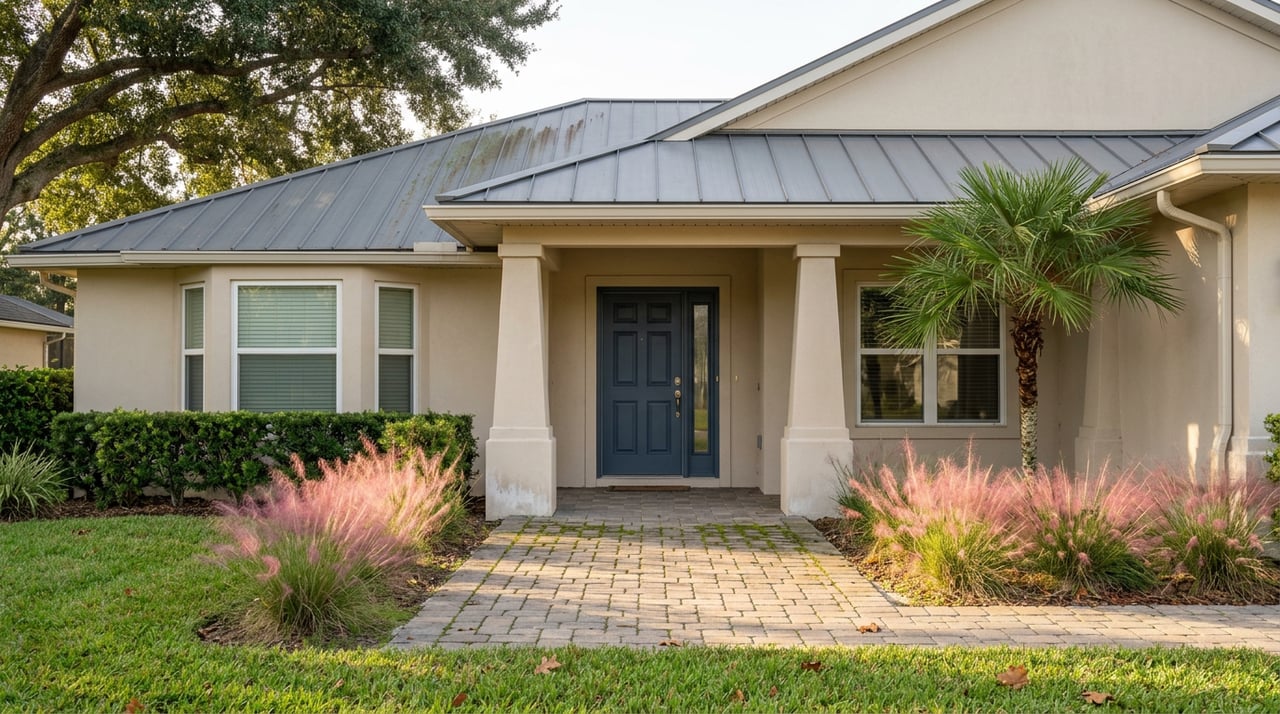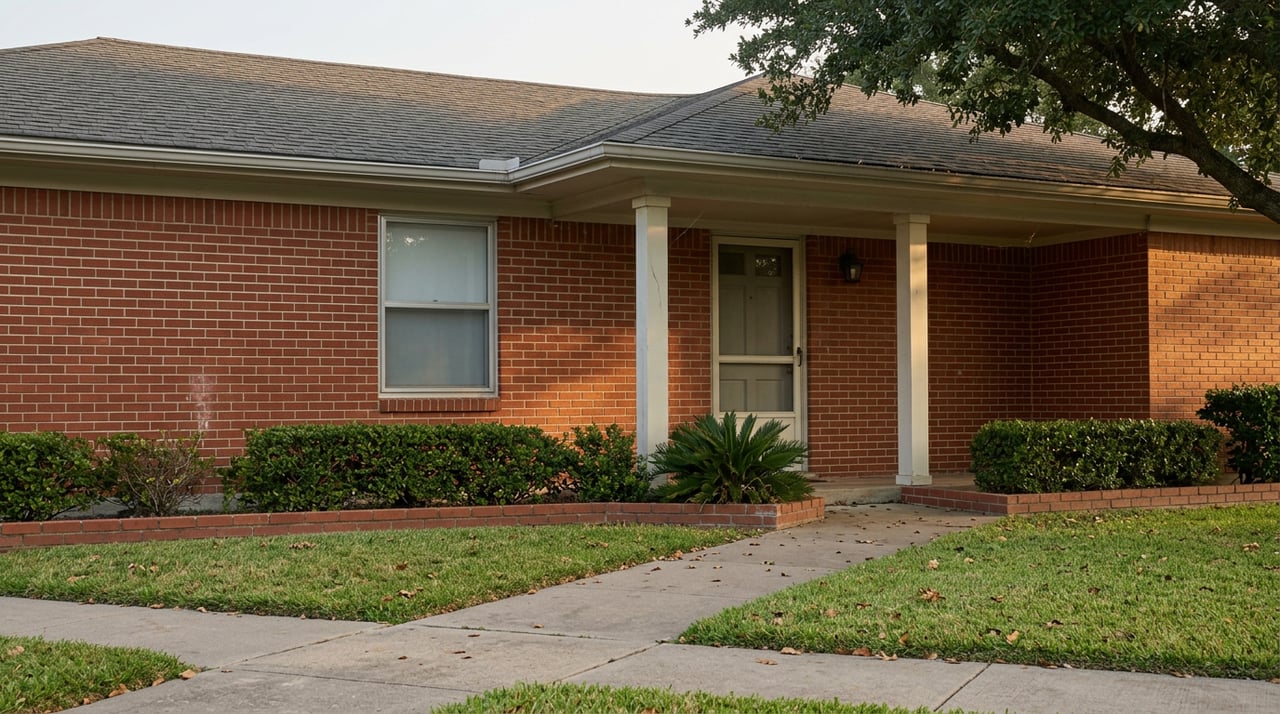
Two listings, ten minutes apart on the Northside, same square footage, same asking price, same three bedrooms and two baths. One sits off Dunn Avenue in a neighborhood built out in the 1970s. The other is three streets deep in a master-planned pocket near Pecan Park Road, framed just last year. A buyer comparing them on price alone would call it a coin flip. A buyer who requests insurance quotes on both would find the true cost of owning them a few hundred dollars a month apart, and that gap has nothing to do with the mortgage.
That gap is the real story of the Northside market right now, and it explains why the neighborhood's median price depends entirely on which part of it you're standing in.
The Number That Doesn't Show Up in the Listing Photos
Ask most buyers what drives their homeowners insurance premium and they will guess location: distance from the coast, flood zone, maybe crime. Insurers increasingly weight something else more heavily: the age of the roof and the building code the home was constructed under.
At the same coverage level, homes built after 2015 average about $1,910 a year in insurance while homes built before 2000 average approximately $3,770, a gap of nearly $1,800 annually. That is not a rounding difference. Over a ten year hold, it is closer to eighteen thousand dollars, money that never shows up in a listing sheet and rarely comes up until a buyer is deep into underwriting.
One Northeast Florida insurer's own book illustrates it plainly: two homes in the same zip code, similar coverage around $450,000, one built in 2019 with a hip roof and impact-rated garage door paying under $2,100 a year, the other built in 1994 with a 2012 shingle roof paying over $3,900, a difference of $1,800 for essentially the same address. Homes built after 2002 were constructed to Florida's current building code and receive automatic underwriting credits, though even older homes can close much of that gap with hurricane straps, impact windows, or a newer roof.
On the Northside specifically, the local number is a North Jacksonville (32218) average annual premium of roughly $2,330, a figure that sits in the middle of that range precisely because the zip code contains both ends of it.
Why the Northside Feels the Split More Than Other Submarkets
Most Jacksonville neighborhoods are architecturally consistent enough that this gap stays theoretical. The Northside is not one of them. Its property mix includes established mid-century houses, rural parcels with acreage, and a steady supply of new construction, with builders continuing to acquire land in the northern reaches of Duval County to add master-planned communities to local inventory.
That mix shows up directly in how differently sources report the area's median price. One 2026 area guide puts Northside single-family prices between $380,000 and $425,000, reflecting the newer construction pockets. Other 2026 market data puts Northside home values between $180,000 and $250,000, describing it as home to some of the metro's $150,000 starter stock. Both are accurate. They are describing two different housing vintages that happen to share a neighborhood name and, in many cases, a zip code.
The Northside and Westside carry some of the most varied housing stock in the metro at various price points, and Jacksonville's older neighborhoods in particular carry a disproportionate share of homes with aging roofs that complicate insurance underwriting. A buyer shopping the Northside by median price alone is comparing two markets as if they were one.
The Investors Are Already Pricing This In
The buyers least bothered by an aging roof are often not owner-occupants at all. Cash buyers have been running at roughly 27 to 30 percent of Jacksonville transactions, well above the historical range of 18 to 20 percent. That activity concentrates specifically in sub-$200,000 homes in the Westside's 32210 and the Northside's 32218 and 32208 zip codes, where buy-and-hold investors targeting rental yield dominate with cash offers.
Cash buyers can absorb an older roof and a higher premium in ways a financed buyer often cannot, since many mortgage lenders require proof of insurability before closing and some carriers still balk at roofs approaching or past fifteen years. Investors are not immune to the cost, but they are less exposed to the underwriting friction that can stall or kill a financed deal.
What is pulling that investor money to these specific zip codes is not mysterious. JAXPORT's ongoing channel deepening and terminal expansion, along with new or expanded distribution centers from major retailers, are bringing thousands of warehouse, logistics, and management jobs that support housing demand across the Northside, Westside, and Clay County submarkets. Two of the port's biggest employers sit within a few miles of these Northside zip codes: Primark's 550,000 square foot distribution center in North Jacksonville, open since 2024, and Southeast Toyota Distributors' newly dedicated $170 million vehicle processing facility at Blount Island, which supports more than 400 full-time jobs with 95 percent of the workforce hired locally.
The Eastport Logistics Park delivered its first phase of spec warehouses on the Northside between late 2025 and early 2026, and its marketing put the pitch plainly:
"In Jacksonville's highly sought-after, port adjacent, Northside industrial submarket."
That framing matters for anyone reading Northside listings as a single neighborhood. The industrial and rental demand pulling investors toward the older, cheaper half of the Northside is a direct byproduct of the same port growth that's filling the newer half with construction crews and higher list prices.
What the Roof-Age Math Looks Like Side by Side
| Build vintage | Typical annual premium* | Approx. 10-year insurance cost |
|---|---|---|
| Pre-2000, original roof | ~$3,770 | ~$37,700 |
| Post-2015, current code | ~$1,910 | ~$19,100 |
*Based on Northeast Florida HO-3 policy data at comparable coverage levels, as reported in April 2026.
That eighteen-thousand-dollar spread over a decade is real money sitting on top of the purchase price, and it belongs in the same conversation as square footage and lot size when a buyer is comparing two Northside listings that look identical on paper.
The $125 Move That Changes the Math
The gap is not fixed. One documented example involved a Mandarin homeowner paying $3,200 a year who completed a wind mitigation inspection documenting hurricane clips, a hip roof, and impact-rated shutters, and saw the carrier drop the premium to $2,400, a savings of $800 a year from a $125 inspection. That same inspection is available to any Northeast Florida homeowner, and it tends to matter most on exactly the kind of older Northside housing stock where the roof-age penalty is steepest.
Buyers and current owners working with an older roof also have the My Safe Florida Home program, which offers grants toward retrofits like these, with $280 million in funding available for the 2025-2026 cycle. For a Northside buyer eyeing a 1980s or 1990s home priced well below the neighborhood's newer-construction median, pairing the purchase with a wind mitigation inspection is often the fastest way to close part of that insurance gap before the first mortgage payment is due.
What to Check Before You Write an Offer on the Northside
- Ask the seller for the roof's permit date, not just its age on paper. Underwriting cares about the actual replacement year.
- Request any existing wind mitigation inspection report. If none exists, get a quote for one before you're under a tight closing timeline.
- Get a homeowners insurance quote during your due diligence period, not after. A financed offer can stall if a carrier won't write the roof.
- If you're comparing homes in 32218 or 32208, factor in that cash investor competition may be keeping some of the least updated inventory moving quickly despite the insurance math.
- Ask whether the home would qualify for a My Safe Florida Home retrofit grant if the roof is close to the age where premiums start climbing.
A Few Questions Worth Settling Upfront
Does a newer roof always mean a lower premium on the Northside? Usually, but not automatically. Coverage amount, distance from the river, and prior claims history still factor in. A newer roof closes most of the gap, not all of it.
Are 32218 and 32208 really the same market? On paper, yes. In practice, they contain both the Northside's most active investor segment and its newest master-planned communities, which is exactly why price-per-square-foot comparisons across the zip code can be misleading without knowing the build year.
Will insurance costs keep climbing through the rest of 2026? Premiums are expected to stay elevated through the year, with continued pressure specifically on older homes with roofs over fifteen years. Florida's 2022 and 2023 legislative reforms have coaxed some insurers back into the market, but rate relief for existing policyholders has been slower to arrive than those reforms promised.
Where This Leaves a Northside Buyer
The Northside's median price was never going to tell the whole story on its own, not in a neighborhood where a 1970s ranch and a brand new build can sit on the same tax roll page. Reading a listing without asking about roof age is a bit like reading only the sale price on a car without asking about the engine. It might run fine for years. It might also cost you eighteen thousand dollars you didn't plan for.
If you're weighing a Northside purchase, or trying to figure out what your current home would actually net you once insurance realities are priced in, Plenti Realty can walk through both sides of that math with you. Get a free home valuation and a straight answer on how your home's age, roof, and location actually stack up in today's Northside market.